
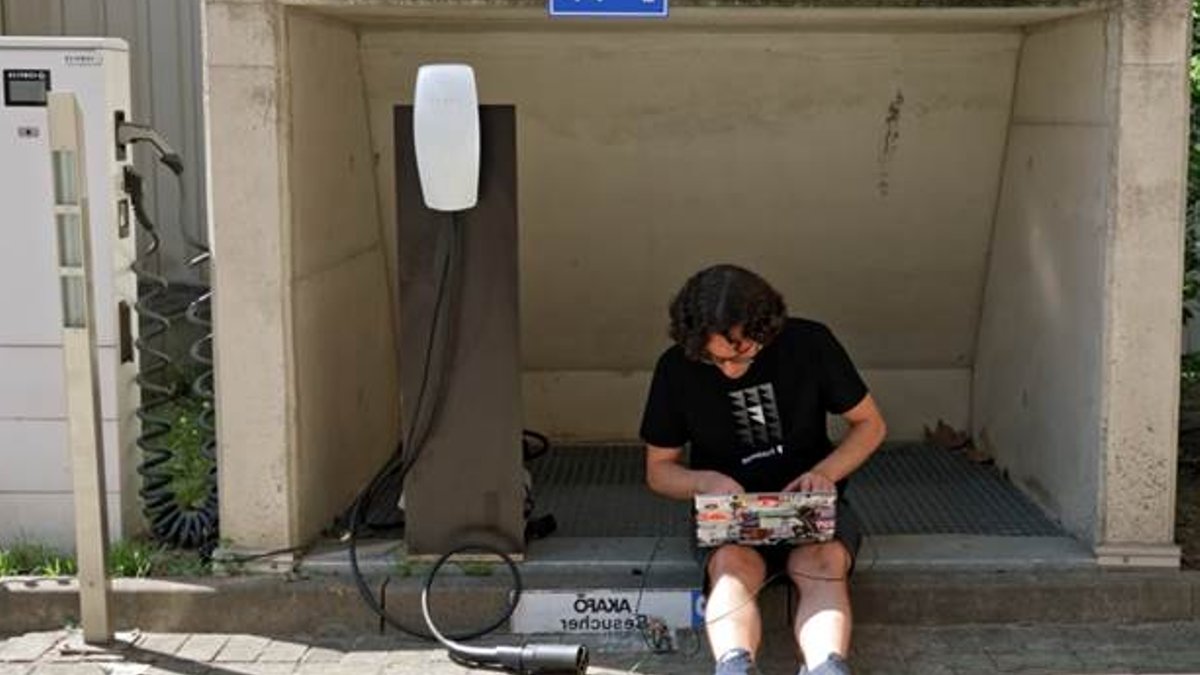
Security researchers have demonstrated an autonomous exploit chain that starts with a single plug‑in at a Tesla Universal Wall Connector and ends with control of two chargers from different manufacturers, highlighting a rare cross‑brand worm in the electric‑vehicle ecosystem.
Autonomous Worm Spreads From Tesla Charger to Competing EV Units
Tobias Scharnowski and Kristian Covic of Fuzzware.io presented the proof‑of‑concept at Black Hat USA earlier this month. Their demo showed the malware moving from the Wall Connector firmware to an Alpine infotainment unit via Wi‑Fi, then hopping to an Autel MaxiCharger and a ChargePoint Home Flex through Bluetooth. The chain required no further user interaction after the initial cable connection, meeting the technical definition of a worm.
The researchers labeled their presentation “Pedal to the Bare Metal.” They emphasized that the exploit chain operated without operator input once the charger was plugged in. The demonstration involved a single physical charger but leveraged wireless links to reach the other devices.
How the Exploit Bypassed Secure Boot and Propagated
Getting into the Wall Connector firmware was difficult because the device runs on a bare‑metal Arm Cortex‑M4 processor with no public source code or debug symbols. To overcome this, the team used “rehosting,” emulating the firmware in software, which let them test more than 1,000 inputs per second instead of the usual one every few seconds.
Related: Minister unveils smart device security labels
The critical bug was a signed integer parsed during signature verification. By driving the value negative, the code triggered a large out‑of‑bounds write to the stack, granting code execution. In a separate step, the team found a way to bypass the charger’s secure boot, allowing unsigned code to be written to flash memory before the signature check.
This combination let the malicious payload persist across reboots and block future updates. The technique builds on a 2025 penetration test by Synacktiv that also used the charger’s charge‑port entry point, and it follows Fuzzware.io’s recent “Master of Pwn” win at the Pwn2Own Automotive competition, where the team collected US$215,500 across seven demos.
Compared with earlier Pwn2Own showcases, this chain is notable for spanning multiple vendors without physical access to each device. While previous exploits often remained confined to a single make, the cross‑brand reach suggests that shared communication interfaces could become a broader attack surface if not carefully segmented. The incident also shows how firmware‑level flaws can cascade through wireless protocols, a pattern that security teams have warned about in other IoT contexts.
Tesla Charging confirmed that the vulnerability was patched in late 2025 and the fix has been rolled out to its fleet. A tweet from the company on August 22, 2026 thanked the researchers for their help and highlighted the value of community‑driven security testing.
Related: Cloudflare reveals cause of major internet outages
Scharnowski and Covic noted that their demonstration used hardware set up for the Pwn2Own competition, not a typical consumer environment. “What we did not demonstrate, and want to be explicit about: internet‑wide prevalence of vulnerable versions, propagation across arbitrary vehicles or chargers, or anything approaching grid destabilisation,” one of them said.
The bug’s discovery relied on fuzzing at a speed that would be impossible on the physical device alone, a reminder that emulation can reveal flaws hidden from traditional testing. The researchers’ approach shows that even devices designed with secure boot can be subverted if the bootloader itself is not fully hardened.
Industry observers say the episode may prompt manufacturers to review how firmware updates are signed and delivered, especially for components that interact over Bluetooth or Wi‑Fi. As electric‑vehicle charging infrastructure expands, ensuring that each link in the chain is independently protected becomes increasingly important.


