
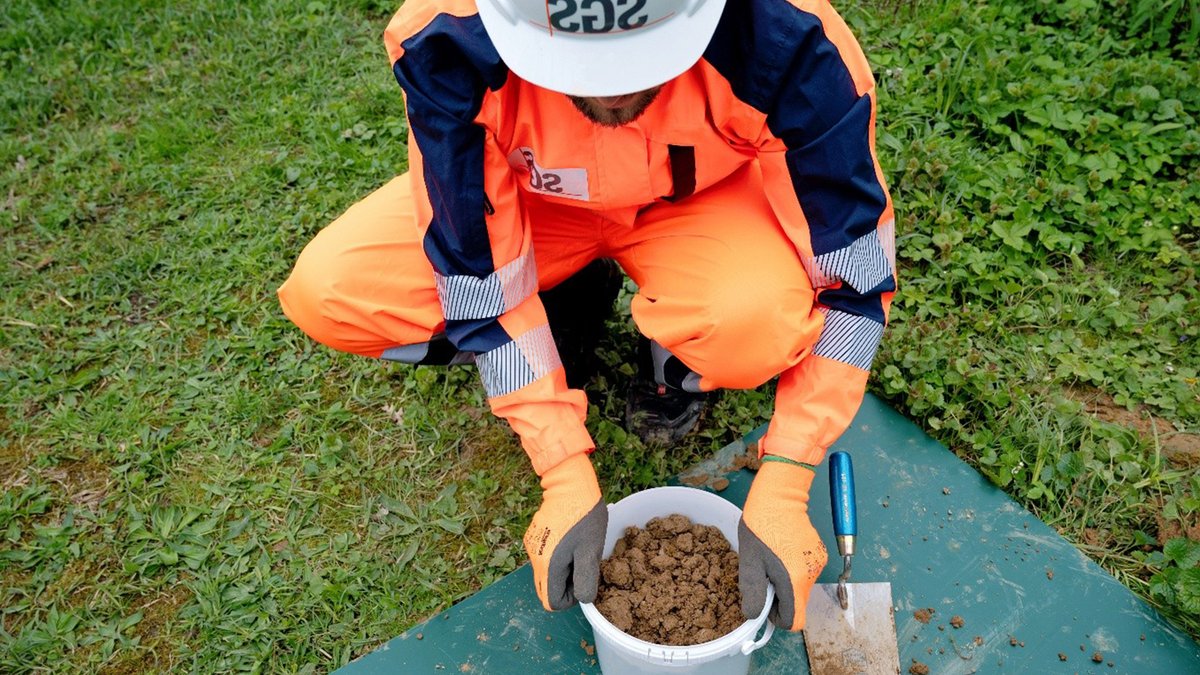
Europe’s new focus on soil health hinges on reliable data and independent verification, a need that spans farmers, industrial operators and carbon-project developers alike. With the European Commission estimating that 60–70 percent of EU soils are degraded, it is clear that proving remediation and sustainable practices actually work is essential.
EU Soil Monitoring Law creates a common framework
Effective on 16 December 2025, the EU Soil Monitoring Law establishes a continent-wide system for tracking soil condition across agricultural, forest and urban lands. By mandating regular sampling and reporting, the law aims to move beyond anecdotal evidence toward a measurable baseline for the entire Union.
The legislation recognizes soils as a multi-purpose asset that influences food production, biodiversity, water retention and carbon storage. Member states are now required to submit data that can be compared across borders, allowing policymakers to identify hotspots of degradation and allocate resources where they are most needed.
SGS leverages data and technology to turn measurements into results
SGS, the world’s leading testing, inspection and certification firm, offers a suite of services that span from initial field investigations to long-term monitoring and independent assurance. Its capabilities include soil sampling, physical and chemical testing, biodiversity assessments and advanced analyses such as environmental DNA and microbiome profiling.
Since September 2026, the company’s Genesis platform has integrated laboratory results with satellite imagery and contextual data. This combination helps stakeholders visualize how soil properties vary across different areas, spot trends over time and pinpoint locations where interventions can deliver the greatest impact.
A single soil test provides a snapshot. Understanding whether soil is improving, deteriorating or responding to an intervention requires consistent monitoring over time. This is particularly important for regenerative agriculture, where changes in management practices can influence soil structure, biological activity and organic carbon. It is equally relevant to industrial sites, where monitoring may reveal contaminant migration or demonstrate the effectiveness of remediation.
SGS’s involvement in a major European soil monitoring programme illustrates the scale of the effort. Selected by the European Commission’s Joint Research Centre, the firm is analysing more than 35,000 soil samples collected across the EU, using laboratories in Portugal and Hungary to establish baselines for organic carbon, biodiversity and pollution risks.
For organisations pursuing climate goals, credible soil-carbon claims depend on representative sampling, bulk-density measurements and repeatable methodologies. While satellite-derived models can extend coverage, physical samples remain the benchmark for validating carbon-stock estimates and supporting market-based carbon-removal projects.
Beyond carbon, the presence of contaminants such as PFAS, heavy metals or microplastics can affect land-use decisions. SGS’s PFASafe® approach applies a four-step analytical process that goes beyond standard targeted testing, offering a more complete picture of PFAS risks.
These integrated services give land managers the data needed to assess risk, adjust practices and demonstrate compliance with emerging environmental standards.
For farmers and local communities, having transparent, independently verified soil data means they can more confidently adopt regenerative techniques, knowing that improvements are tracked and validated. It also provides a clearer basis for negotiating incentives or compensation linked to sustainable land stewardship.
SGS’s role as a Validation and Verification Body for carbon standards further strengthens the credibility of reported outcomes, a factor that influences investment decisions and the functioning of carbon markets.
Tailored analytical approaches for emerging risks
In parallel, microbiome profiling and environmental DNA (eDNA) analysis reveal the biological dimensions of soil health. By characterising microbial communities, these tools highlight shifts that may accompany restoration or indicate stress from pollutants. Such data complement chemical results, offering a fuller picture of ecosystem function.
Independent assurance strengthens market confidence
As a Validation and Verification Body for schemes such as the Verified Carbon Standard, SGS reviews project documentation, audits field practices and evaluates reported outcomes. This third-party scrutiny helps secure financing and facilitates entry into carbon markets.
Beyond carbon, verification services support regenerative-agriculture initiatives and land-sector greenhouse-gas programmes. By assessing whether reported improvements align with baseline data, these services reduce the risk of overstated claims.
SGS’s global network of more than 2,500 laboratories and over 100,000 professionals underpins its ability to deliver consistent results worldwide.


