
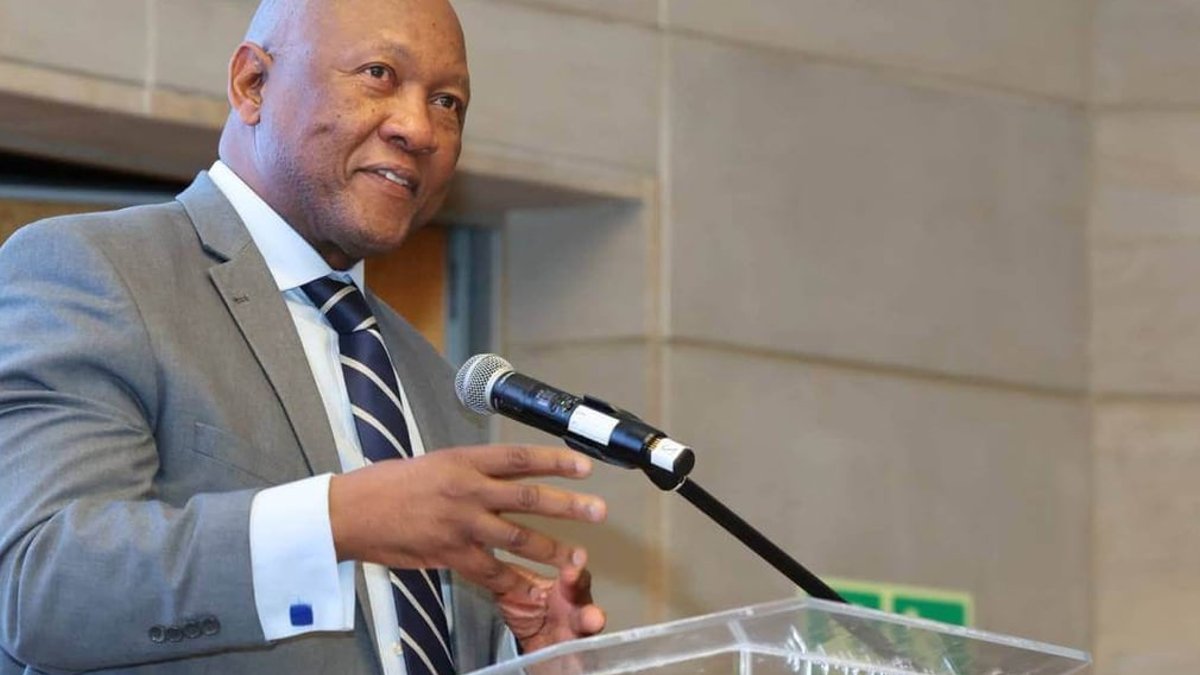
The South African ICT sector faces an urgent need for structural overhaul to keep pace with AI-driven transformation, according to Digital Council Africa President Dr. Andile Ngcaba. Speaking at the Conext 2026 conference in Johannesburg, Ngcaba warned that the rapid advancement of artificial intelligence and superintelligence demands a complete redesign of both regulatory frameworks and physical infrastructure.
Ngcaba highlighted the unprecedented speed of technological change, framing it as a challenge for both government and industry. “The velocity of change is something that none of us have ever seen before. [If you] see all the things that are happening, the critical question, therefore is, when the speed moves like this, and when velocity changes, how do we as a country and as an industry respond to this?” he asked.
The core issue, according to Ngcaba, lies in South Africa‘s ability to handle increased internet traffic and IT demand. He explained that the country needs to increase its IT load and push up its Internet traffic. Current systems, Ngcaba argued, were built for a different era and cannot support the computational needs of modern AI applications. The country’s cybersecurity defenses also face significant strain, particularly in areas like fraud investigation and GPT poisoning—a tactic where malicious actors inject false, biased, or corrupted information into AI training data to skew its behavior, introduce bias, or create hidden vulnerabilities.
A shortage of specialized skills compounds the problem. Ngcaba noted that South Africa lacks sufficient expertise to investigate cybercrimes effectively, particularly in understanding attacks that exploit AI systems. “There is a thin layer of specialist in persecution in understanding this cognitive warfare of fraud as well as GPT poisoning,” he said.
Related Post: Vodacom boosts South Africa 5G speeds with carrier aggregation rollout
The proposed solution centers on a full-stack redesign of the ICT sector, encompassing legal, policy, and technical adjustments. Ngcaba emphasized that existing structures, developed over the past three decades, are no longer adequate for an AI-driven economy. “We need full institutional redesign of industry because of this new compute architecture that is bringing AI superintelligence and all this agentic ecosystem that is fundamentally making everything we have done in the last 30 years irrelevant,” he explained. To address this, he called for a dedicated team of experts to identify and resolve regulatory bottlenecks within an 18-month timeframe.
The urgency of the situation was echoed by industry leaders. Maziv CEO Dietlof Maré pointed to the exponential growth of generative AI, noting that even intensive study efforts cannot keep pace with technological advancements. “For every 100 hours you invest in learning it, AI seems to move ahead even faster,” Maré told attendees. Maziv’s strategy now focuses on expanding high-quality, reliable connectivity to support AI-driven demand.
The stakes are further raised by recent regulatory developments. After years of delays, Vodacom’s acquisition of a 30% stake in Maziv was finalized in December 2025, following a reversal of earlier opposition. The deal, initially blocked in 2024 by the Competition Tribunal, was approved after revised conditions addressed competition concerns. The transaction is expected to inject billions into South Africa’s economy annually, reinforcing connectivity infrastructure critical for AI adoption.


