
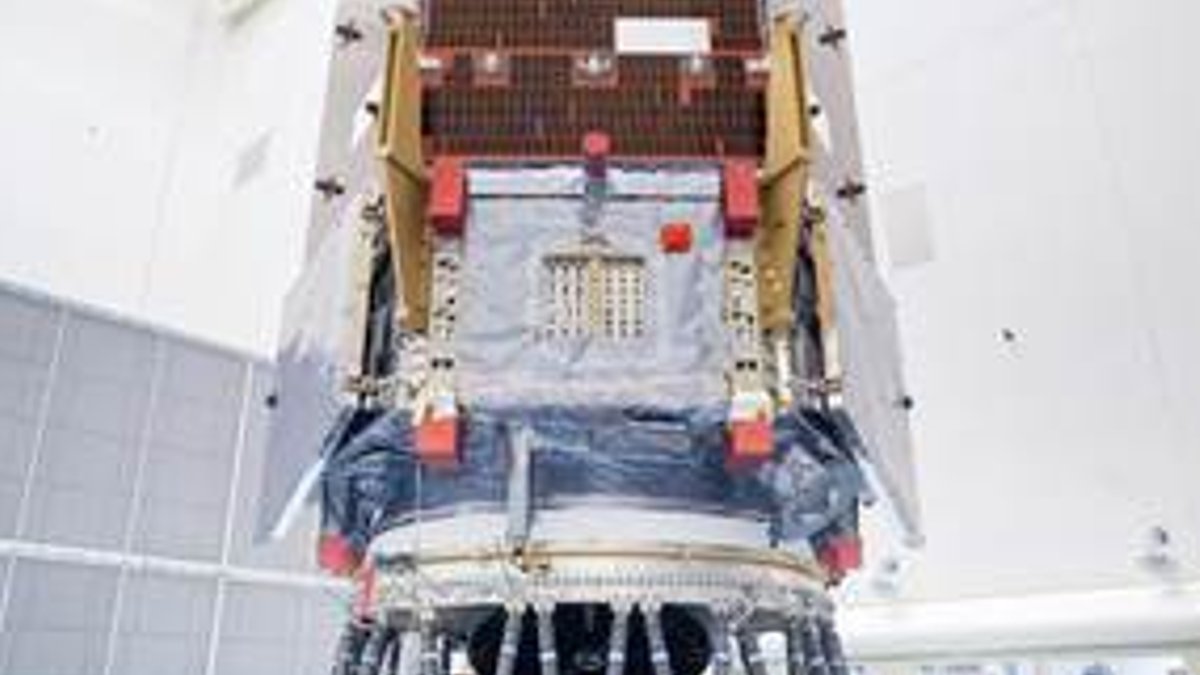
The Nancy Grace Roman Space Telescope, with a budget of roughly $4 billion, is scheduled to launch Sunday from Kennedy Space Center in Florida aboard a SpaceX Falcon Heavy rocket. The launch comes nine months earlier than originally planned.
The mission will last more than a year, scanning more than two billion galaxies to investigate dark matter and dark energy. These invisible components make up about 95% of the universe’s total contents.
Visible matter—stars, planets, and gas—accounts for just 5%. Dark matter, detectable only through its gravitational effects on galaxies, may represent 27%. Dark energy, which drives the universe’s accelerating expansion, could make up the remaining 68%.
Related: ASD alerts to attacks on Australian TeamCity servers
Mustapha Ishak, a cosmologist at the University of Texas at Dallas and part of the telescope’s scientific team, explained the core questions. “Is dark energy a constant property of space, or does it change over time?” Recent findings from the Dark Energy Spectroscopic Instrument suggest possible variations. Another possibility is that Einstein’s theory of gravity may need adjustments at cosmic scales.
The telescope will test general relativity across billions of light-years by mapping galaxy clusters and gravitational lensing. If observations deviate from predictions, it could indicate gaps in the theory or entirely new physics.
Unlike most telescopes, which focus on small sky regions, Roman’s wide-field view and rapid survey speed will allow scientists to study cosmic structures on an unprecedented scale. Julie McEnery, the project’s senior scientist at NASA’s Goddard Space Flight Center, described it as a way to “find the weird, the rare, and the unusual.”
The main instrument balances high sensitivity with broad coverage. McEnery noted this will help trace the formation and evolution of galaxies and galaxy clusters over billions of years.
Related: Attackers Use AI to Identify Valuable Files
The telescope will also conduct one of the most extensive searches for exoplanets.
The telescope honors Nancy Grace Roman, NASA’s first chief astronomer, who died in 2018 at 93. She played a key role in developing the Hubble Space Telescope and earned the nickname “mother of Hubble.”
If the mission proceeds as planned, Roman will begin its survey within months of reaching orbit, offering new insights into the universe’s enduring mysteries.


