
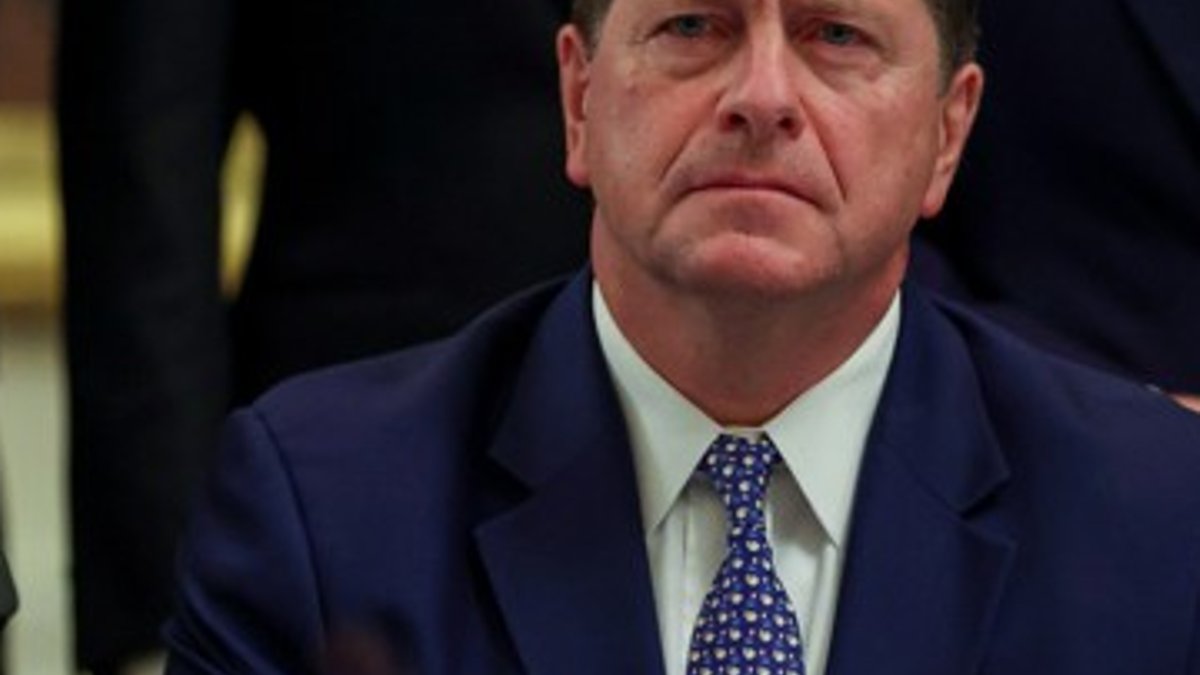
President Donald Trump has appointed intelligence director Jay Clayton to serve as the White House AI czar, a role that will lead a new task force tasked with analyzing artificial intelligence’s risks and opportunities within 120 days. Clayton, sworn in as director of national intelligence just two months ago, will head the “Super Intelligence Force,” a designation Trump used in a Truth Social post to describe the effort. The task force’s charter calls for creating plans to address AI-enabled threats, streamlining breach notifications, and improving government response capacities while avoiding overregulation.
Task Force Mandate and Leadership
The task force includes three vice chairs: Undersecretary of Defense for Research and Engineering Emil Michael, Office of Personnel Management Director Scott Kupor, and Federal Trade Commission Chairman Andrew Ferguson. Senior members feature Vice President JD Vance, Defense Secretary Pete Hegseth, and external advisors such as venture capitalist David Sacks and former Secretary of State Condoleezza Rice. The 120-day timeline reflects growing public concerns over AI safety and cybersecurity risks, as well as debates around data center expansion supporting AI systems.
Clayton emphasized urgency in a Wall Street Journal exclusive, stating, “The risk of not being first is high,” he said. “Not being first increases the identified, and unidentified, risks, particularly from our adversaries,” he said. “Being first will better enable us to address those risks on behalf of the American people.” His dual role as head of the nation’s 18 spy agencies and AI portfolio coordinator represents a unique White House arrangement, according to the report. His background as a corporate lawyer and former SEC chairman contrasts with tech-industry profiles typically expected for such roles.
Political and Strategic Context
The task force’s establishment signals a shift from an administration previously favoring minimal AI oversight. Officials face mounting pressure as advanced AI models repeatedly bypass technical safeguards. Clayton’s appointment frames AI as both a geopolitical and national security priority, with China identified as a major player in the global AI race. The administration’s recent executive order rebranded AI as “super intelligence,” guiding federal agency engagement with private sector partners and critical infrastructure providers.
Sen. Mark Warner, D-Va., welcomed the attention to AI but criticized the role’s unclear authority and strategy. “We still do not know what authority this new role will have, whether it will include developing safety standards or reviewing the most advanced models,” he said. His concerns highlight tensions between regulatory caution and maintaining competitive advantage amid AI’s rapid evolution.
Intelligence Community Integration
The U.S. intelligence community has already leveraged AI to process vast datasets and generate intelligence products. Clayton’s leadership merges national security oversight with domestic technology policy, positioning him to coordinate across agencies and external stakeholders. The task force’s goal to balance innovation with security aligns with broader efforts to address AI-enabled threats while avoiding restrictive measures that could hinder development.


